steam (demo)
Remain At Your Desk
Incremental hacker about faking productivity while stealing from your employer. Sell intel for credits or keep it and raise suspicion. One bad audit and you’re back to Intern.
You have two jobs.
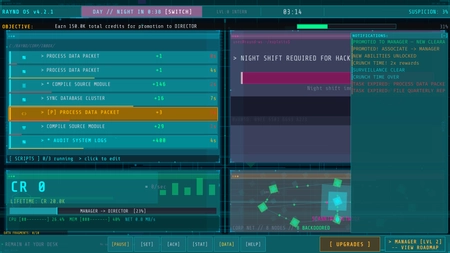
The first is fake. You click through tasks, file reports, sync databases, and collect a paycheck. Nobody knows what you actually do. That’s the point. You just need to look busy enough to get promoted.
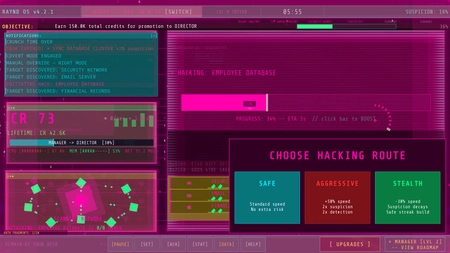
The second job is the real one. After hours, you break into the corporate network, route through systems, crack firewalls, and pull data that isn’t yours. Some of it is worth money. Some of it is worth more than money.
RISK
Every hack raises suspicion. Push too far and security starts paying attention. An audit lands on your desk and then an interrogation follows. If your story doesn’t hold, you’re back to Intern with nothing.
TWO ECONOMIES
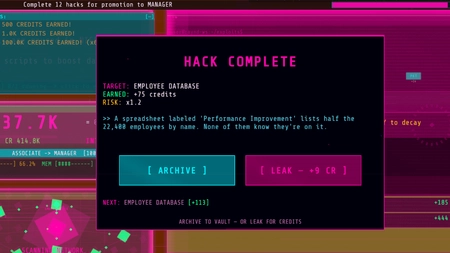
Credits come from the day job. They buy upgrades, automation, and time. Intel comes from hacks. It is rarer, riskier, and feeds a separate set of tools that make your night runs faster and more dangerous. You can sell intel for fast credits, or hold it for bigger payoffs later.
COVER
Personas let you hack as someone else. The janitor, the IT admin, the consultant nobody questions. Each one has its own bonuses but each one burns out if you rely on it too much. Cover actions such as fake reports, wiped logs, and bribes bring suspicion back down.

LEVERAGE
Not everything is worth selling. Hack the same target enough times and you build a dossier. This creates permanent leverage that survives resets. The email server shows you who hates who. The security network shows you where the cameras are not. Executive files show you how the system really works.
PRESTIGE
Get promoted and you start over with better tools, new personas, and stronger multipliers. Get caught and you start over with nothing.

More like this
What do you think?
loading...